
You don’t need much to get started with MeshCore. A compatible 868 MHz LoRa device, an antenna and a phone or computer are enough to get you onto the network.
We don’t run our own online store, but below are some of the hardware options we recommend for getting started with MeshCore in Essex.
If you’re completely new: we’d suggest starting with a Heltec LoRa 32 V3 with a case, battery and antenna. It’s inexpensive, well supported and gives you everything you need to start experimenting.
Our budget choice: Heltec V3 all-in-one
The Heltec LoRa 32 V3 is one of the cheapest and easiest ways to try MeshCore.
It’s a small ESP32-based LoRa radio with an OLED display and Bluetooth. Versions are readily available already fitted into a case with a battery and removable antenna, giving you a complete portable MeshCore Companion for relatively little money.
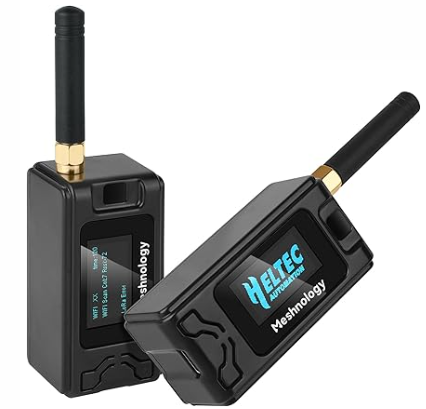
Why we like the Heltec V3
- Cheap – an inexpensive way to experiment with MeshCore
- Small – easy to carry around as a Companion
- Bluetooth – connects to your phone for messaging
- OLED display – useful basic information without needing the phone
- External antenna connection – allows you to experiment with better 868 MHz antennas
- Well supported by MeshCore – easy to flash using the official web flasher
Should I buy one or two?
One is all you need to get started. Flash it with MeshCore Companion firmware, connect it to your phone and see what you can hear around your location.
A twin pack can still be good value if you know you’re going to experiment further. You could use one as your portable Companion and experiment with the second device at home or, if you have a genuinely useful location, configure it as a dedicated repeater.
Don’t assume that every home needs its own repeater, though. Repeater location matters much more than simply having another repeater. A device in a high loft or elevated position with a good radio path may be useful; one sitting downstairs alongside several existing repeaters probably won’t add much to the network.
Buy a Heltec V3 with case:
Amazon – 2 pack |
Amazon – single |
Heltec V3 on eBay |
Heltec V3 on AliExpress
Buying tip: Amazon is often more expensive than ordering directly from China, but can make sense if you want one quickly or prefer easier UK delivery and returns. Check exactly what is included before ordering, as some listings include the case, battery and antenna while others are board-only.
Cheapest option: Heltec V3 board-only
If you already have the bits you need, or fancy putting together your own enclosure, you can buy the Heltec LoRa 32 V3 as a bare board.
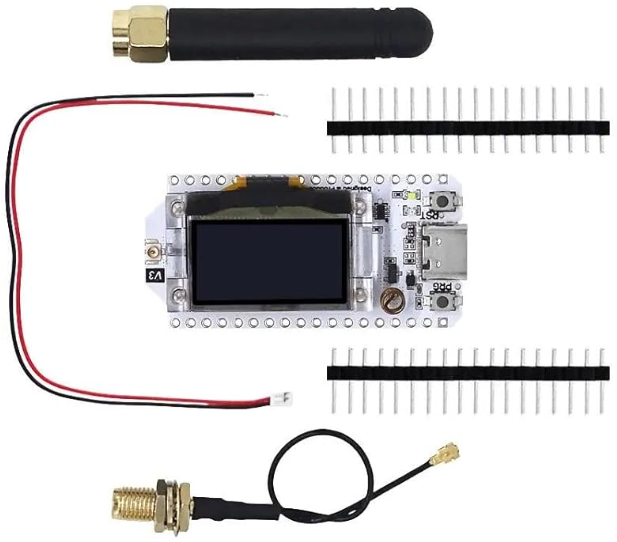
This can be a particularly good option for a fixed installation where you don’t need a neat handheld case.
Remember that you’ll still need a suitable antenna, power source and, depending on what you’re building, possibly a battery and enclosure.
Buy a Heltec V3 board-only:
Amazon – single board |
Heltec V3 on eBay |
Heltec V3 on AliExpress
Make sure you buy the 868 MHz version
This is important. LoRa equipment is sold for different radio bands around the world.
For the normal licence-exempt MeshCore network used in the UK, make sure the hardware and antenna you buy are suitable for the 868 MHz band.
Don’t accidentally order a 915 MHz version intended for markets such as North America simply because the board looks identical in the photograph.
What about the antenna?
The small antenna supplied with an inexpensive Heltec kit is perfectly adequate for getting started.
Once you’ve got MeshCore working, however, antenna position is one of the best things to experiment with.
Before spending money on another radio, try moving your existing device:
- upstairs
- near a window
- into the loft
- temporarily outside
- to higher ground
If that makes a big difference, a better permanent antenna installation may be more useful than buying a more expensive radio.
If you do replace the antenna, make sure it’s designed for 868 MHz and has the correct connector for your device.
Can I use hardware I already own?
Possibly. If you’ve previously experimented with Meshtastic or other LoRa projects, you may already own a device capable of running MeshCore.
MeshCore supports a growing range of hardware, so check the current list before buying another board:
Check supported devices on the official MeshCore flasher →
What about T-Deck and other MeshCore devices?
Heltec V3 isn’t the only option. MeshCore supports other hardware, including more sophisticated portable devices with larger screens, keyboards, GPS and built-in batteries.
These can make excellent standalone or portable MeshCore devices, but they’re considerably more expensive than a basic Heltec board.
For someone who simply wants to find out whether MeshCore is for them, we’d start cheaply. Get a basic Companion working, explore the local network and then decide whether a more capable device is worth buying.
What should I buy for a repeater?
Before buying hardware specifically for a repeater, consider the location first.
A permanent repeater makes most sense where it can provide useful additional coverage – particularly from an elevated position or somewhere that can bridge existing parts of the network.
For a repeater installation, you may want to think about:
- a reliable power supply
- a suitable 868 MHz antenna
- antenna height and location
- weatherproofing for outdoor installations
- reliable long-term operation
- whether your location actually fills a gap in existing coverage
Take a look at our Essex MeshCore Coverage Map before deciding where another repeater might be useful.
What we’d buy to get started
If you simply want to try MeshCore without spending much money, our suggestion is straightforward:
Buy one 868 MHz Heltec V3 with a case, battery and antenna, flash it as a Companion and start exploring.
If the twin pack isn’t much more expensive, having a second board gives you something to experiment with later – but you certainly don’t need two devices to join the existing Essex network.
Once your device arrives, follow our Getting Started with MeshCore in Essex guide to install the firmware and get connected.
Affiliate disclosure: Some links on this page are affiliate links. If you buy something after following one of these links, EssexMesh may receive a small commission from retailers such as Amazon, eBay or AliExpress. It doesn’t normally cost you anything extra and helps towards the cost of running this site.